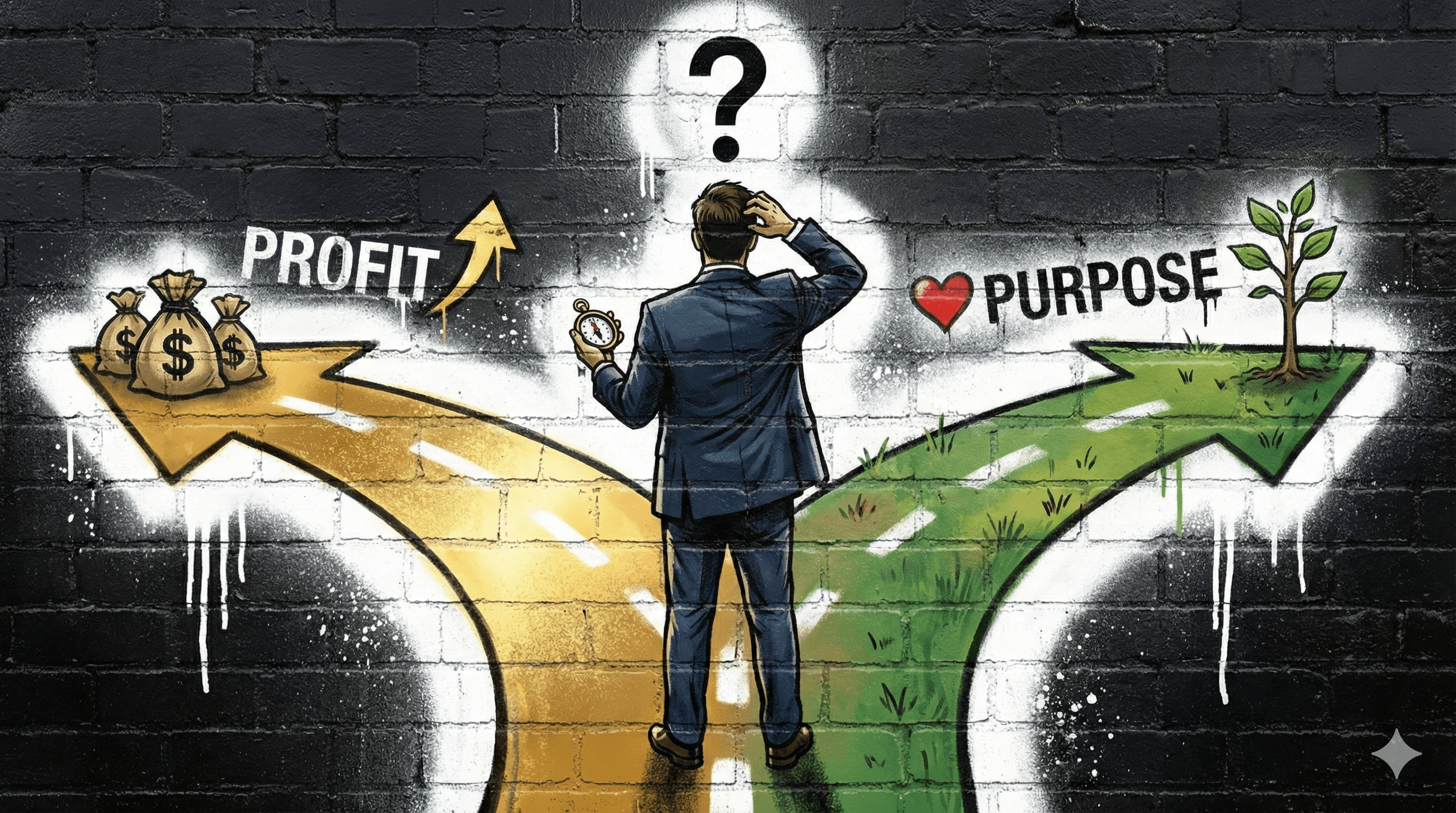
Multiple CTAs in a marketing email may feel generous. One CTA, in the right place, at the right time, converts.
I work with small, specialist professional services teams. Their marketing teams are almost always under-resourced, frequently great at what they do, and in the hustle of getting things done, miss the subtle levers of the very conversion moment they have been building up to.
This article was born from a client situation I couldn't stop thinking about. A well-run webinar series, genuinely useful content, credible, well-known speakers. And a follow-up email with five calls to action sent identically to every attendee! Over time, qualification rates dropped, even while attendance rates grew. Because the follow-up was doing too much and, in doing so, was weakening the very buyer signals it was meant to surface.
That pattern, overwhelm killing intent before it can be read, is something I first recognised not through marketing theory but through sales and operations experience. When you've watched deals stall, you start to understand what actually signals readiness versus what just signals mild curiosity. That instinct transferred directly into how I think about email sequencing.
The frustration I keep coming back to is efficiency. Small teams don't have the luxury of wasted effort. When your content is working and your follow-up isn't, that's not a content problem, it's a mechanics problem. And mechanics can be fixed.
This article is the fix I wish more teams would make before their warm audiences go cold. A little more context now:
Imagine you've just run a webinar. Forty, maybe sixty, people attended. Another 30 registered and didn't make it. That's a warm audience of people who gave you their time or at least their attention and signalled some level of interest in what you do.
Then you send your follow-up email.
It thanks them for attending and recaps the session, offers them the recording, to take a personalised assessment, request a free ebook, join a newsletter subscription, book a call with your team, and an invite to the next event. Five calls to action, all in one email and your reader’s head has exploded - too many decisions - leaving them thinking “what do you really want from me because it looks like you can’t decide!”
Following up this way could overshadow your great content and speakers. To be successful in moving your buyer forward vs them pressing the delete button is to understand buyer psychology, and it's a regularly overlooked conversion miss in B2B marketing.
What multiple CTAs actually do to your reader
In an email, where you have seconds to earn a click, it's fatal because it immediately creates decision fatigue before engagement has even started
On the surface, multiple CTAs appear give readers more options but they also give the reader more reasons to defer. When everything is prioritised, nothing is. The reader scans, feels mildly overwhelmed, and closes the email intending to come back later. They don't come back.
More specifically, for example, five CTAs in one email removes your ability to read intent. If someone clicks "subscribe to the newsletter," what does that tell you about their readiness to buy? Very little. If someone completes, say, a self-assessment tool, that tells you a lot more. But when both actions exist in the same email, competing for the same eyeballs, you can't distinguish a curious browser from a motivated buyer.
Buyer stage determines CTA, not the other way around
This is a core principle many thought-leadership follow-up emails violate: the call to action should be determined by where the buyer is in their journey, not by how much you want to say.
Webinar attendees (especially for a thought-leadership series) are almost always at the awareness or consideration stage. They came to learn. They're often not yet ready to buy. The job of your follow-up email isn't to close them; it's to advance them one stage.
That means the right CTA is whatever most efficiently surfaces intent without seeming pushy or obviously missing “the middle” part of the buyer journey.
For most B2B audiences, a self-assessment or diagnostic tool does this better than anything else at this stage. It's low friction, two to three minutes and there is no sales conversation required. It's also personalised - the output is specific to them, not generic content. Plus, it's self-qualifying - someone who completes an assessment of their own business problem is demonstrating active, motivated interest. That's your MQL event, right there.
An ebook offer, a newsletter, a call invitation - these are all useful, but they belong downstream, triggered by what someone does or doesn't do after the first email. They are not competing peers of the assessment CTA. Treating them as such dilutes the signal you're trying to read.
What a good sequence should actually look like
For attendees, the psychology is straightforward. They attended, they have context, and that ‘hot’ intent drop-off starts immediately after the session ends. Your email should go out the same day, it should be short and make one ask, for example:
“The fastest way to build on what you heard today is to see where your own process stands. Our free two-minute assessment gives you a personalised report - something you can act on or take into a team conversation.
[START THE ASSESSMENT]”
That's it! A brief PS with the recording link for anyone who wants to revisit. Nothing else.
For registered no-shows, the psychology is different. These contacts demonstrated some interest but not enough to prioritise attending live. They need a lower-commitment re-entry point first - the recording, with the assessment offered as a next step, not a simultaneous ask.
Two CTAs are justified here, but they're sequential in intent: watch first, assess when ready - a path to conversion.
For non-completers (people who received email one and didn't act) email two shifts a gear. Now you offer something else for example an ebook or other piece of thought-leadership, keeping the assessment available, and adding the next webinar as a PS. The tone becomes "here's more value" rather than "here's your next step." This is a nurturing branch, not a conversion one, and the difference matters.
Where the other CTAs belong
To be clear, none of the other CTAs cut from the follow-up email are wrong, they're just in the wrong place and not aligned to where the buyer is based on their previous action/s.
For example, Newsletter subscribe is best-placed (in this example) on the assessment results page, when someone has just received personalised insights and is at peak engagement. Asking them to stay connected in that moment is logical, not pushy. In the follow-up email, it feels awkward - like perhaps you don't have a better ask.
Book a call belongs in email three or four of your nurture sequence, after the assessment results have been delivered and absorbed. It can also sit on the assessment results page as a route for high-intent contacts. In a day-one follow-up email to a cold webinar audience, it's too much, too soon, and the contacts who would have said yes are put off by the pressure.
The Next webinar CTA belongs in a PS line, rather than at the same level as your conversion CTAs, it is a relationship development signal.
What about existing clients you ask?
Clients who attended or registered aren't leads, they're relationships and sending them the same sequence as a cold prospect is at best tone-deaf, at worst damaging. Their follow-up email should have no conversion agenda. It's a single, warm touchpoint: here's the recording if you'd like to revisit it, or pass it on to a colleague who might find it useful.
This last part is important - internal sharing is how your content and influence reaches new contacts inside accounts you already service.
One CTA, the recording link, nothing else. No assessment, no ebook offer, no call invitation. The branching logic for clients is simple: they receive this one email and exit the sequence entirely. If a client does complete the assessment or book a call off their own back, treat that as a meaningful signal and route it to their account owner. The job here is to stay valuable without being presumptuous.
The single most useful approach
Before you start designing the journey, ask yourself, what one action, taken by this person at this moment, would tell you the most about their readiness to buy? Everything else can wait for the next email.
Taking a focused follow-up sequence approach - designing one primary CTA per email, timed to buyer stage, with the assessment doing the qualification work will improve your click rates.
Subsequently, that gives your sales team better signals leading to shorter sales cycles, and conversations that start from a place of demonstrated interest rather than cold outreach. And we all know - happy sales team - happy life!