
As a CEO, many CMOs are effectively chasing your attention. When they invest heavily in ultimate guides and thought leadership content, what do they need to do differently to get you to engage?
It’s got to be relevant and it’s got to be accessible. I do download content fairly often, but I don’t tend to download massive documents - I just don’t have the time. Time is critical.
I prefer what I’d describe as snackable content. I think a lot of people are overwhelmed by the volume of information out there and we’re all short on time. Most PDFs end up in my “to read” folder and then never actually get read.
The issue isn’t necessarily the insight, it’s the format it’s delivered in. I prefer fast, accessible content: videos, podcasts, short pieces that I can consume easily.
There are exceptions. There are a couple of documents I read every year because they’re directly relevant to the business challenges I’m facing. But fundamentally there’s just a lot out there, so content needs to be targeted, relevant, and consumable.
Many B2B marketing teams would say they already tick those boxes. Is that enough?
There is a lot of repetitive content out there. You only have to look at how many articles are being published on AI, they’re often saying the same things and delivered in the same way.
If content tackled issues in a slightly different way, or was delivered in a more engaging or distinctive format, that would definitely get my attention. Right now, a lot of it looks and sounds the same.
Is content consumption always “on” for you, or are there moments when you actively seek things out?
Personally, I like reading and taking on content. If I’m dealing with a specific business challenge, I’ll actively go out and find solutions to that problem. I’ll ignore a lot of content that feels generic or irrelevant, but when I need to dig into something, I’ll seek it out.
You’ve held senior GTM roles across major organisations. When you look at a marketing dashboard, what’s the metric you care most about and which ones do you have no time for?
The metric I care about most is marketing-sourced pipeline, but it needs to be real pipeline. Opportunities that are actionable and can turn into revenue.
Marketing-attributed revenue is another key one. A single number that shows whether marketing is genuinely helping grow the business.
Those metrics aren’t always available straight away because they rely on good data, systems, and workflows. That data might come from the website, events, inbound enquiries — wherever. But that’s what I want to see.
Vanity metrics, on the other hand, things that look good on dashboards but don’t translate into revenue, are less helpful. Page impressions, generic page views, follower counts: they matter, but they don’t tell me whether we’re generating qualified demand or revenue.
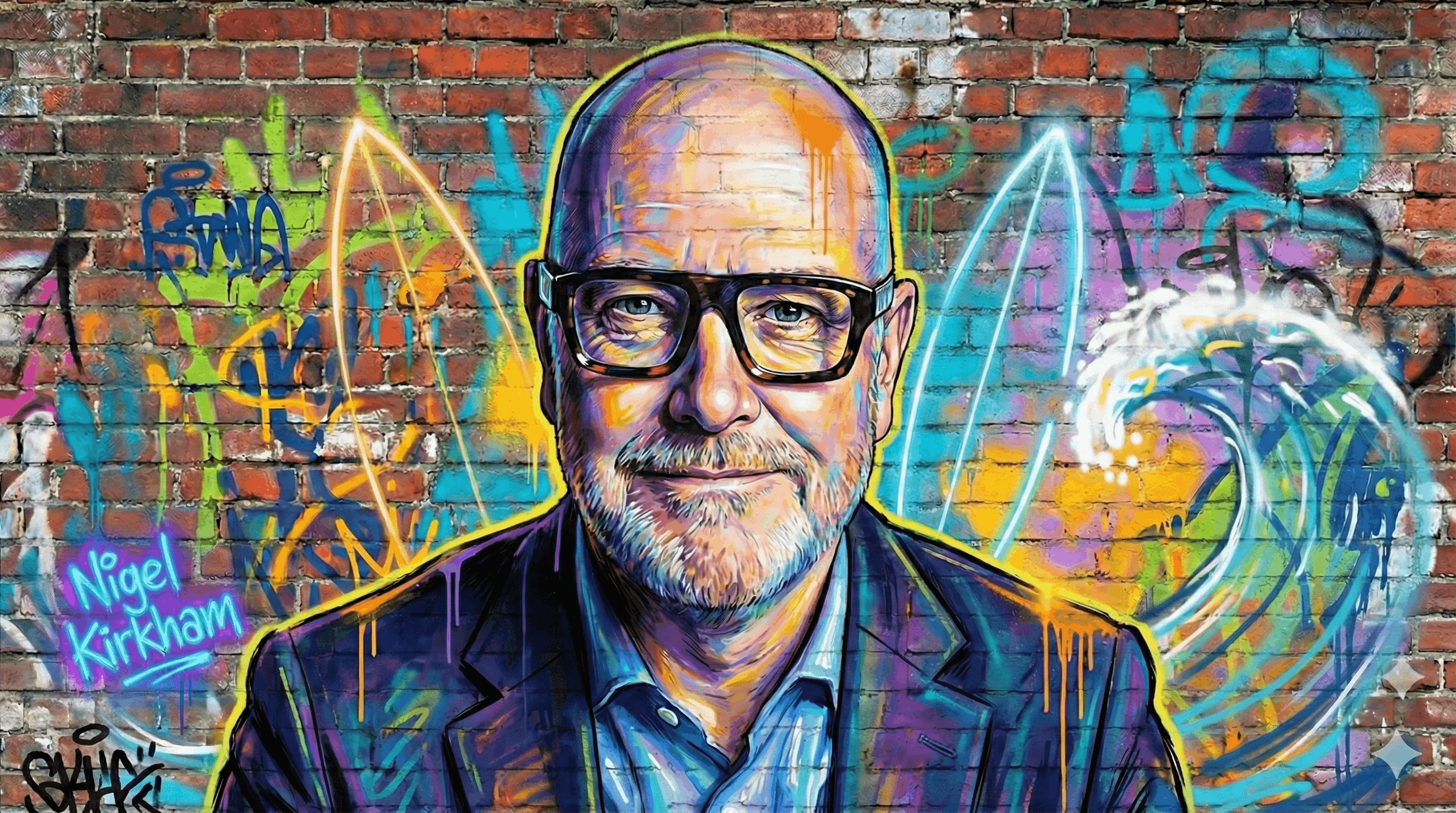
You’re also a practicing artist. Has creativity influenced your approach to marketing?
I’ve been painting pretty much all my life. I wanted to go to art college originally, but my dad encouraged me to get what he called a “proper degree”.
A few years ago I had some downtime and got back into my artwork. We have a place in Cornwall, and I started creating sea-life-inspired pieces in a pop-art style. A gallery there picked them up and began exhibiting them.
So yes, creativity has always been part of who I am.
How does that creative side show up in your marketing philosophy, particularly around brand versus performance?
Brand awareness is vitally important. It doesn’t always translate immediately into revenue metrics, but being known for something, what you’re good at, what you stand for, really matters.
That said, particularly in tougher times, you have to stay focused on growth and revenue. Some marketing metrics simply don’t add value when you’re trying to understand how the business is actually performing.
So it’s about balance. Brand supports long-term growth, but it has to sit alongside clear commercial outcomes.
If a downturn hits and budgets need to be cut quickly, where do you start?
I wouldn’t start by cutting marketing. It’s counterintuitive. You can’t cut your way out of trouble, you have to grow your way out.
Marketing is a lever for growth, not a discretionary cost. I’d look elsewhere first: vendor consolidation, travel, back-office duplication, non-core projects.
In one organisation I worked in, we had around 800 internal projects running at once, many solving the same problems in different ways across regions. We shut most of them down and replaced them with a smaller number of consistent initiatives. The cost savings were significant.
If marketing cuts are unavoidable, it should be about reallocation, not elimination. Dial back experimental activity, but protect channels that reliably generate demand; account-based marketing, targeted industry events, proven performance channels.
You’ve written about the productivity paradox. Are marketers over-tooled?
Yes, I think there are too many tools in most organisations, and that adds complexity. Individually the tools are fine, but collectively - especially in global organisations - they create friction, and friction reduces productivity.
I’ve worked in businesses operating across 30 countries, each with its own CRM system, analytics tools, and implementations. That fragmentation adds cost and slows everything down.
There are huge savings and productivity gains to be made through consolidation. There are dozens of platforms- HubSpot, Salesforce, Marketo, Pardot, Mailchimp, Hootsuite and many more - all doing similar things.
Reducing the number of tools and standardising how they’re used is absolutely key.
Watch the full interview on the B2B Marketing United YouTube channel.