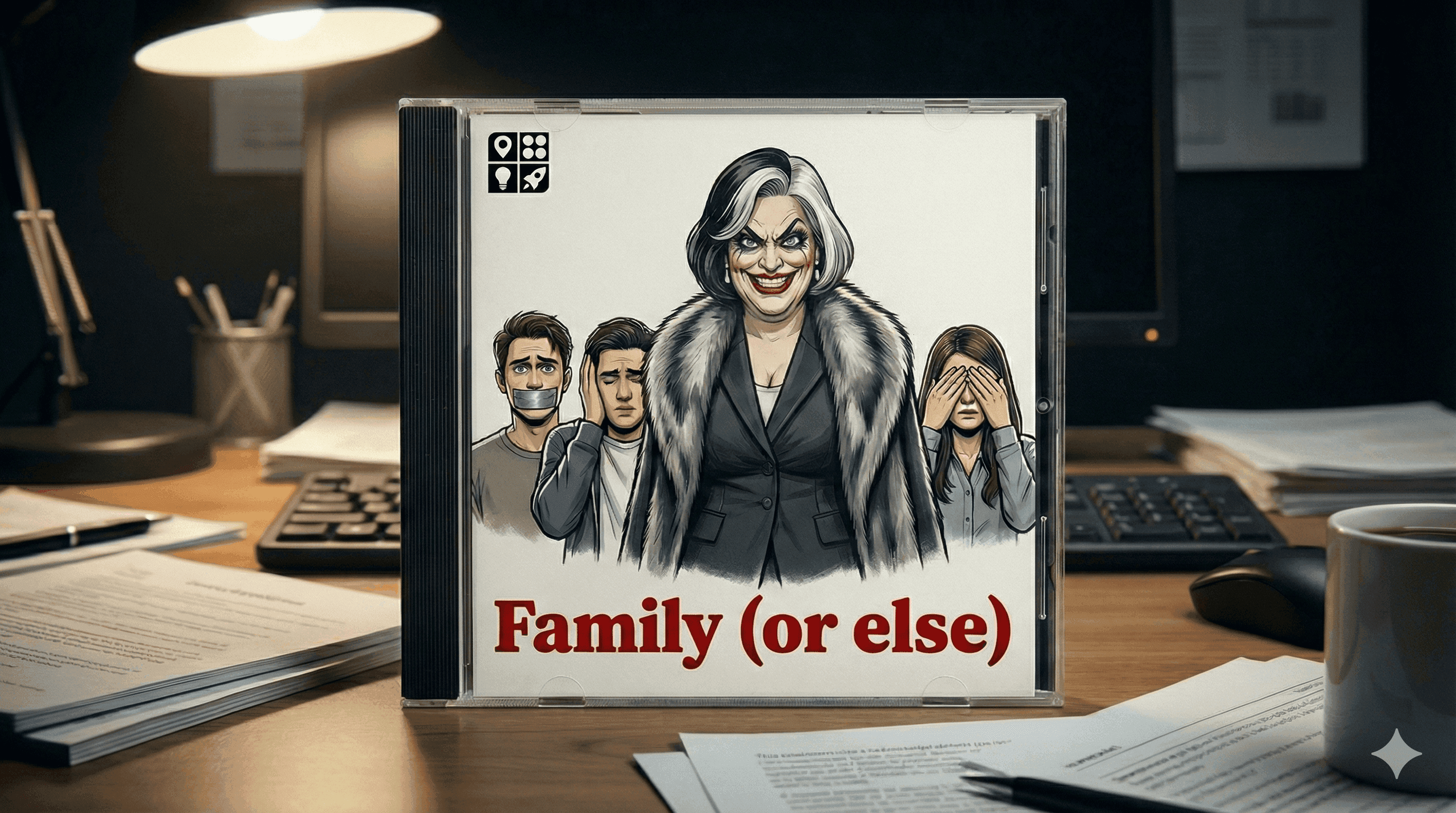
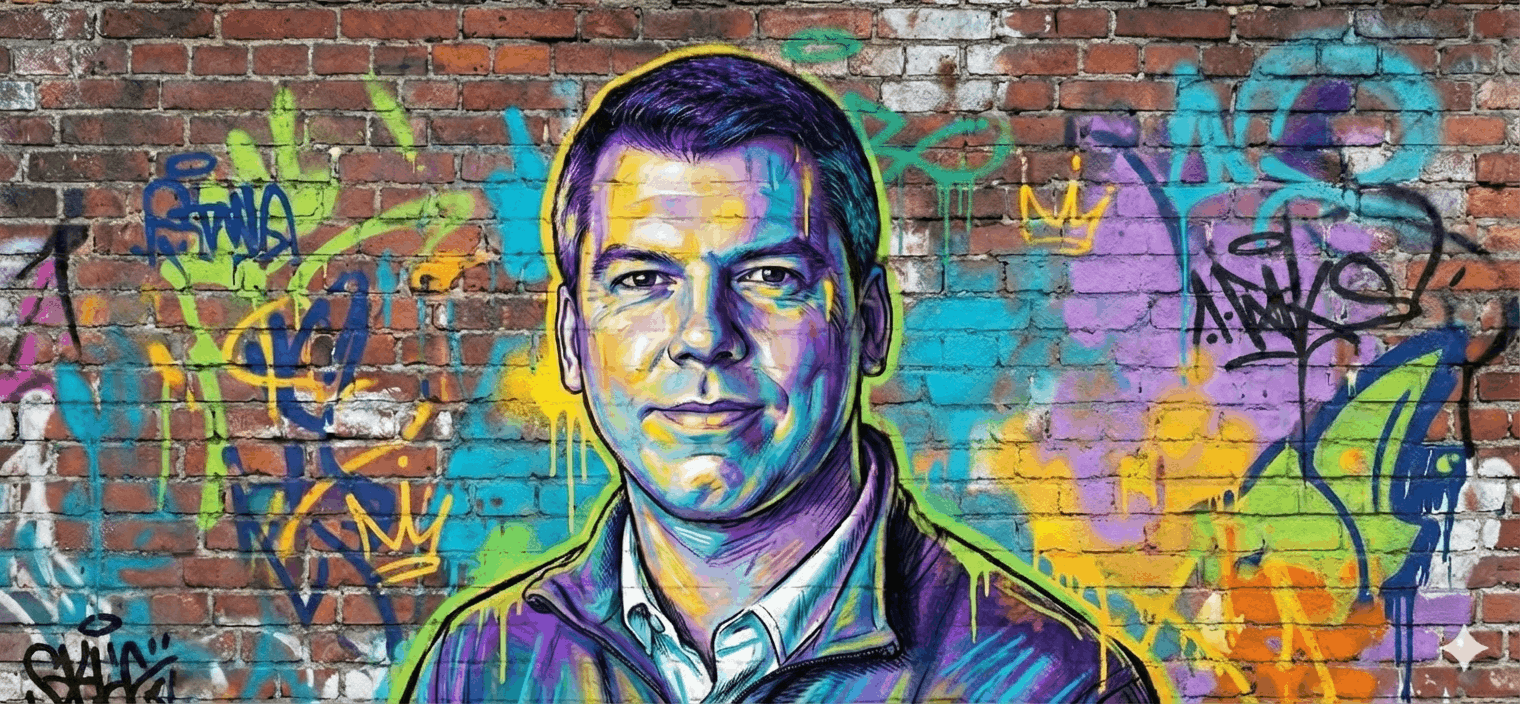
I need to tell you about the Duchess of Doom.
She is not a real person. She is a character built from a pattern. A pattern I have watched play out across multiple organisations, multiple sectors, and multiple decades of working in and around B2B. If you think you recognise her, you probably do. Because she is not one person. She is a type. And the type is everywhere.
She talks about culture constantly. She uses the word "family" as a full stop to every conversation she does not want to have. She rewards loyalty and punishes honesty. She surrounds herself with people who agree with her, and then wonders why the strategy keeps missing.
She is the subject of the new Marketing Mixtape track, "Family (or Else)".
The song is played for effect, but the leadership failure pattern it describes is real, well documented, and expensive.
Amy Edmondson at Harvard spent years researching why some teams outperform others. The answer was not talent, experience, or seniority. It was psychological safety. The ability to challenge, question, and admit problems without fearing the consequences. Google ran the same experiment internally through Project Aristotle and arrived at exactly the same conclusion. Psychological safety was the single strongest predictor of high performing teams.
When leaders punish dissent, even subtly, they do not eliminate problems. They eliminate visibility of problems.
I have watched this play out in commercial reviews where the strategy is clearly wrong but nobody says so. In strategy sessions where every challenging idea gets filtered out before it reaches the room. In quarterly updates delivered with forced enthusiasm because the alternative is being labelled "not on the bus".
The pattern typically has four parts.
The first is insecurity masked as authority. Leaders who surround themselves with yes people are not building high performing teams but insulation. Research from McKinsey and others shows that teams with low cognitive diversity make weaker strategic decisions and miss market shifts more often.
The second is fear replacing accountability. When performance drops, healthy leaders look at systems, strategy, and capability. Fear-based leaders look for excuses. The economy. The market. The competition. Activity levels. The number of calls being made. Anything except their own decisions. Blame becomes a shield.
The third is loyalty tests disguised as culture. Employee surveys, engagement scores, and values statements are meant to surface truth. In toxic cultures they become compliance tests. Say the right thing or be labelled "not a team player". When people believe honesty will be punished, they stop giving it. What remains is performative positivity and quiet disengagement.
The fourth is outdated thinking protected by power. Leaders who cannot adapt often suppress challenge rather than update their worldview. Instead of learning, they do more of what they have always done. Instead of experimenting, they enforce obedience. The organisation freezes while the market moves.
There is a familiar sequence to how the whole thing unfolds.
The smartest people leave first, either by choice or by being managed out. The most honest voices go quiet. Decisions get slower and worse. Strategy becomes last year’s plan with a new date. And throughout all of it, the leader interprets the absence of challenge as evidence that they are right.
In my experience, toxic leaders rarely develop successors, let alone ones who think differently. They promote people who look and sound like them, or who can be shaped to do so. The behaviour replicates. The blind spots replicate with it.
From the outside the organisation can look stable, especially if the company is still hitting its numbers. From the inside, it is brittle.
Gallup has been tracking this for decades. People do not leave companies. They leave managers. More specifically, they leave environments where they feel unheard, unsafe, and undervalued. The commercial consequences follow reliably: retention cost, productivity loss, strategic drift, innovation debt. It rarely shows up cleanly on a spreadsheet, which is partly why it persists so long unchallenged.
There is a meaningful difference between confident leadership and fear-based management. Confident leaders want to know what is not working. Fear-based leaders want to know who to blame for it. Confident leaders reward contribution. Fear-based cultures reward loyalty. Healthy teams perform for outcomes. Fear-based teams perform for optics.
The most dangerous phrase in any of this is usually delivered warmly, often at a team offsite, always with a slightly too long pause before the question mark:
"We're a family, right?"
Real families argue. They challenge. They tell each other things they would rather not hear. What these environments usually mean by "family" is something different. Loyalty without reciprocity. Submission without safety. Compliance dressed as belonging.
So, what does the opposite actually look like?
Brave enough to be challenged. Brave enough to hear what is not working. Brave enough to let people smarter than them make them uncomfortable.
Healthy organisations are built on psychological safety, where people can speak without risking their livelihood. On constructive conflict, where ideas are challenged but people are respected. On real accountability, where leaders own results rather than explain them away.
It is also the job of CEOs and CHROs to spot toxic patterns and act on it. But, unfortunately, far too often they enable it through inaction or denial instead.
The moment a leader needs constant agreement to feel secure, the team stops thinking and starts performing for approval. And when that happens, you are not running an organisation anymore. You are running a production.
The Duchess of Doom is a fictional character. But the pattern she represents is one of the most well-documented failure modes in organisational leadership. If she feels familiar, that says something about how common this is. Not about any one person.
Listen to "Family (or Else)" on Marketing Mixtape.