I hated being called out by Ritson as ‘unqualified’ so I trained; now I share my experience with students at B2B marketing’s best Academy
I fell into marketing. I trained as a journalist.
When it came to the point at which we had to make career decisions, journalism was the nearest thing I could think of to all the things I was good at or considered fun: meeting and chatting to people; building relationships and winning their trust; writing, telling stories; finding stuff out that someone somewhere was trying to keep secret and - on regular occasions - genuinely holding powerful figures to account.
A few weeks ago, Professor Ritson caused some trademark havoc on Linkedin with a quiz he designed for some Ipsos research; a test whose results he says proves two thirds of us marketers in the UK and US are unqualified and unfit for purpose.
Like most of us in our teens, I lacked self-awareness. However, one thing I knew for sure even then - and still do - is that feeling ‘tied’ to a desk and repeating the same tasks every day was not an option. Journalism - a profession that does require training if you’re to reach a decent level - fitted. For about a decade I did well, travelled extensively, learned a great deal and laughed a lot. Right up to my last job in journalism as editor of Marketing Week magazine.
One of my most successful manoeuvres in that role was poaching Ritson from my direct competitor and persuading him to join me as Marketing Week’s top columnist and good friend. He resisted at first because he’s an honorable guy who felt some loyalty to his team and editor but we kept talking and eventually, he was persuaded.
We formed a good working partnership and he was a key part of any success I had as editor of a big business weekly.
Some years later, when I’d swapped editorial for commercial (a typical ‘me’ move: the beginning of year four in the highest profile and best job I’d ever had at the time - to get itchy feet and quit to find new adventure); Ritson launched his MiniMBA training programme.
So successful was his entrepreneurial idea that it became a monster. A decade on, Ritson has ceased the formal teaching and brand consultancy on which he built his name.
Drawing on decades of experience both advising global brands and teaching MBA students at the world’s top business schools, Ritson has built the digital, affordable and hence accessible, MBA equivalent training programme for marketers. The MiniMBA trains around 8,000 marketers every year across 40 different countries and boasts a Net Promoter Score of +84.
By comparison, in the year ending June 2025, the UK’s century-old Chartered Institute of Marketing (CIM) trained 5,100 marketers and achieved an NPS of +50.5.
Perhaps one edge that Ritson has over professional trainers is that he didn’t make his career exclusively about educating others. Yes he’s an academic but he;s been in the thick of the jungle too - consultant in the boardrooms of the world’s most famous businesses: Louis Vuitton, Dom Pérignon, Hennessy, Sephora, WD-40, Ericsson, News Corp and countless others.
That’s why the MiniMBA is trusted to train marketers from the likes of American Express, McDonald’s, Nestle, Red Bull and Tesco.
It was during this huge growth period for the MiniMBA that I found myself on the wrong side of what had become Ritson’s loudest and most repeated attack on the industry.
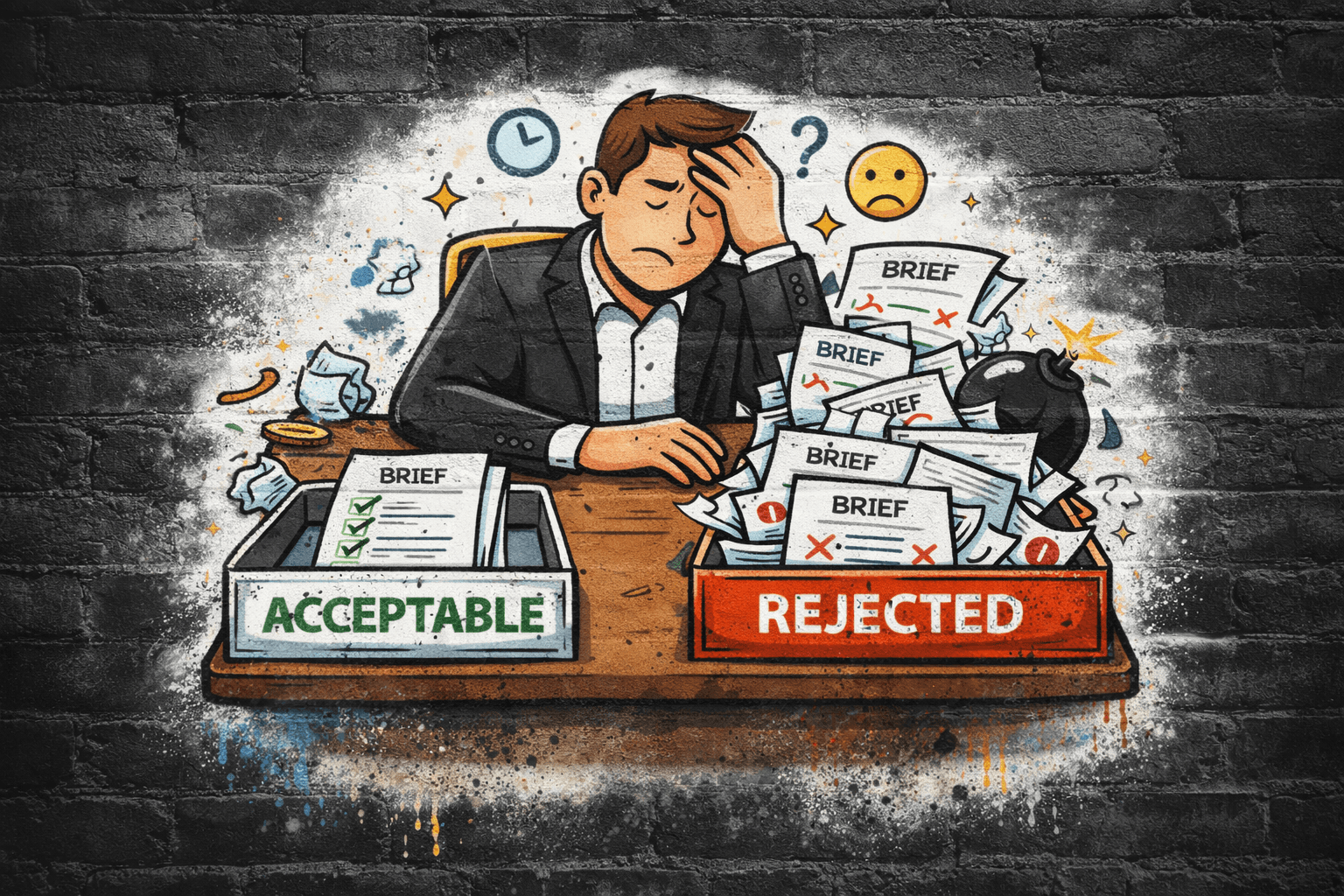
Year after year, Ritson would use his platform to call us out - the lot of us, the whole marketing industry - for our lack of formal training and qualifications.
He told us that if we’re running marketing for our organisations based on what we’ve learned on the job and our ‘natural’ business or people skills, then we were probably doing it wrong.
I fucking hated it - seeing my mate rant and curse about something so important and - to my mind correct - and knowing I was one of those he was pointing to.
I felt embarrassed to be herded in with the masses of mediocre marketers around me and told I lacked the required skills to properly deliver in an industry in which I was building some profile.
Needing to rid myself of Ritson-induced anxiety, I insisted to a new boss that I wanted to make my leadership position ‘real’ and that I’d be putting myself and my marketing team through the MiniMBA as my first big deliverable.
Sure enough, when I embarked on the MiniMBA I realised just how much I didn't know; just how much there is to know; how small a slice of good marketing practice we B2B marketers actually involve ourselves in, and how much of an advantage trained marketers enjoy.
Ritson and I speak about the training gap and his continuing (and curse-littered) fury at the arrogance of untrained marketers in this week’s episode of the Do More With Less podcast.
Now, I’d advise anyone to do some marketing training. I’m not close to the courses offered by the CIM or the IPA, but I do know the market lacks really good training aimed at B2B marketers specifically.
There’s really not much guidance or proper career development around for us. That’s why B2B Marketing United has taken its training offer so seriously so early on in its existence.
While the internet is groaning with free and paid-for courses teaching isolated skills and tactics: digital advertising, email marketing, content writing and so on; our Academy serves a different (and arguably more pressing) need.
I remember getting into tech scale-ups and startups around 2014, where young, new starters were more than capable of hacking together tactical campaign skills from YouTube self-training videos. I watched it happen. Anything they wanted to know, new tools they wanted to integrate and optimise - they’d watch a tutorial, practise it, train one another and ‘class’ would be over within 10 minutes.
Nobody cared about CPD points. They just wanted to get better at their jobs. Fast
With such an abundance of free opportunities to learn tactics, two half days learning ‘B2B copywriting’ for £800 isn’t really what many B2B marketers need right now.
The evolution of AI and how we use it continues to rapidly thin out marketing functions. Many of my clients at OrbitalX are $50m+ revenue businesses served by marketing functions of just one or two ‘generalists’ plus partner vendors and tech.
Huge swathes of middle management are being ripped out - often along with expensive senior executives. Young marketers are finding themselves over-promoted too quickly into senior positions with little or no support infrastructure.
Hiring managers have switched their attention to what recruiter Rowan Fisk describes as 'the ability to walk into any conversation, challenge the strategy, and have it received as contribution rather than threat'.
Bosses want "systems thinking over channel depth," writes Fisk, "orchestration over execution; [they want] critical thinking and judgment. The ability to see the whole board and make decisions that hold up across time."
The stuff marketers (young and old) most need to know has changed almost instantly. It’s not ‘digital marketing’ skills. Sure, running a YouTube account, creating videos for Linkedin campaigns, managing paid media and better email marketing are all table stakes.
But you don’t need to pay to learn them.
The valuable lessons - tools and behaviours we senior marketers learned over twenty years that the next generation needs to pick up in mere months - include how to 'win' budget discussions with CFOs; how to talk about, plan and deliver pipeline and revenue impact (rather than arguing over the definition of an 'MQL)'; how to say 'no' and make it sound like a 'yes'; how to smash Q1's numbers while building the brand marketing play to prepare the ground for Q4 and beyond.
That's why the three courses you’ll find at the Academy are about marketing leadership as opposed to tactical bits and bobs. The courses aren’t taught by professional trainers but real marketers. Lessons are based on experience; real-life scenarios; the wins; the fuck-ups; and all the lessons and other stuff we wish we’d learned much sooner. The stuff I share when mentoring and coaching.
If we're to avoid losing the current middle generation of B2B marketers being ousted out of previously secure jobs and a new generation of kids - tech-savvy but short on business smarts - they need a short-cut access to leadership and go-to-market thinking.
As the business environment changes, so does the way we train and prepare for it.
We should celebrate it. School’s getting more fun.