I’ve long believed that if we could run a proper win loss analysis on every enterprise deal ever done, we’d find that most decisions are not for the ‘best’ solution, but for the one that carries the least personal and professional risk.
Some organisations still behave as if influence only happens in meetings, presentations, and pitches. But anyone who has sat on the buying side of a large decision knows the real work, debate and decisions happen elsewhere.
In corridor conversations. In internal Slack threads. In late-night email chains. In the quiet moment when someone asks themselves, “If this goes wrong, what will it mean for me?”
Gartner’s Buying Group and Sense Making research shows that complex purchases are made by groups, not individuals, and that progress is blocked less by lack of information and more by lack of confidence and internal alignment. Buyers are rarely asking, “Do we know enough?” They are asking, “Are we sure enough to put our names to this?”
When you are not in the room, influence does not disappear. You just have to hope you have done enough of the right things that it permeates.
How buying groups actually make sense of decisions
Gartner call this ‘sense making’ – the process by which a group interprets information, aligns perspectives, and becomes confident enough to commit. It isn’t about learning features.
In practice, buying groups use external signals to answer questions like:
Is this company credible?
Do they really understand our world?
Have others like us trusted them?
Will I look foolish if this goes wrong?
Is this the safest decision I can defend internally?
Do I want to give these guys business?
Do I want to work with them for the foreseeable future?
From the buying side, I once watched a nine-figure technology deal stall for months, not because of any functional gap, but because a CFO quietly told our CIO, “I’m just not convinced these people are a safe pair of hands.” The vendor never heard that sentence. But it decided the outcome.
Conversely, as part of an ABM programme I once ran, we put a prospect in a room with an existing client and then deliberately left. We let them talk for hours without us present. No sales pitch. No marketing slides. No intervention.
When we won the deal, the feedback was simple. They trusted us because we trusted the conversation, and because the client spoke honestly about where we were strong and where we were not, and how we showed up when things went wrong.
That is influence when you are not in the room.
Persuasion versus reassurance
Most marketing is built to persuade. Late-stage B2B buying is about reassurance. It is about helping people defend a decision they already lean towards, not forcing them into a new one.
In those situations, what they do not need is another feature list. They simply want enough confidence to take the final step without fearing personal fallout.
This is why content that genuinely helps get deals over the line does not shout. It steadies.
Mental availability and narrative consistency
Research from the B2B Institute and Ehrenberg Bass introduces the concept of mental availability, which in simple terms means how easily your brand comes to mind in a buying situation and what it is associated with when it does. When I studied B2B marketing over 25 years ago (gulp), we simply called this ‘recall’.
Mental availability is built through consistent association with specific problems, outcomes, and points of view. When stakeholders discuss an issue, your name should feel like a natural, credible reference point.
That only happens when your story is coherent across:
Your content
Your leadership voice
Your subject matter experts
Your customers
Your partners and analysts
Reality check
If your website, your executives’ LinkedIn feeds, your case studies, and your sales decks all tell slightly different versions of who you are, and in different ways, you are not building influence. It is a wasted opportunity for marginal gains.
Map influence to buying group roles
Gartner’s Buying Group model shows that different stakeholders carry different risks.
The economic buyer worries about strategic impact, financial exposure, and reputation with peers and board.
The technical and functional evaluators worry about feasibility, integration, and whether your team truly understands their reality.
The risk and governance influencers worry about compliance, security, contractual exposure, and personal accountability.
Influence outside the room comes from making sure each of these roles can find reassurance in your external presence.
Proxies for presence
When you are not in the room, others speak for you:
Content that explains trade-offs in plain language
Leaders who show clarity and stability of thought
Experts who share practical lessons from the field
Customers who talk honestly about what went wrong and how it was fixed
Analysts and partners who validate your position
These act as proxies for your credibility and reduce the psychological cost of choosing you.
The psychology underneath
Several behavioural forces shape this:
Authority bias means people trust credible voices.
Social proof means they look for evidence others have chosen safely.
Loss aversion means the fear of a wrong decision outweighs the upside of a bold one.
Status quo bias means familiar often feels safer than better.
Your job as a marketer is to ensure the signals prospective clients encounter counterbalance these forces, not reinforce their anxiety.
How marketing can deliberately shape influence
Practical steps that work:
Map priority accounts and their buying group roles
Identify the unspoken fears at each stage
Build content that answers those fears directly
Align visible leaders and experts to those concerns
Ensure customers and partners tell consistent stories
Train sales on which assets reduce which objections
This is hard work and will require support from the comms team, but it will be hugely valuable to your sales teams and they will really notice it.
How to tell if you are influencing without being present
I doubt we will ever see the holy grail of perfect attribution. But we should be able to see signals:
Prospects referencing your content before you send it
Stakeholders already using your language internally
Fewer late-stage surprises
Shorter internal approval cycles
Sales reporting higher confidence and fewer defensive conversations
It can be hard for marketing to get explicit credit once this way of working becomes embedded, as sales will simply come to expect it. But the process of putting it in place will make you a stronger, more commercial marketer, and the insight you gain from those conversations will serve you for the rest of your career.
The simple rule to remember
In complex B2B buying, deals are rarely won by the loudest voice in the room. They are won by the most trusted voice in the minds of the group when you are not there.
If your narrative, your people, and your proof help prospective clients feel safe, aligned, and confident, you are influencing the buying group long before the final meeting and materially increasing your chances of winning.
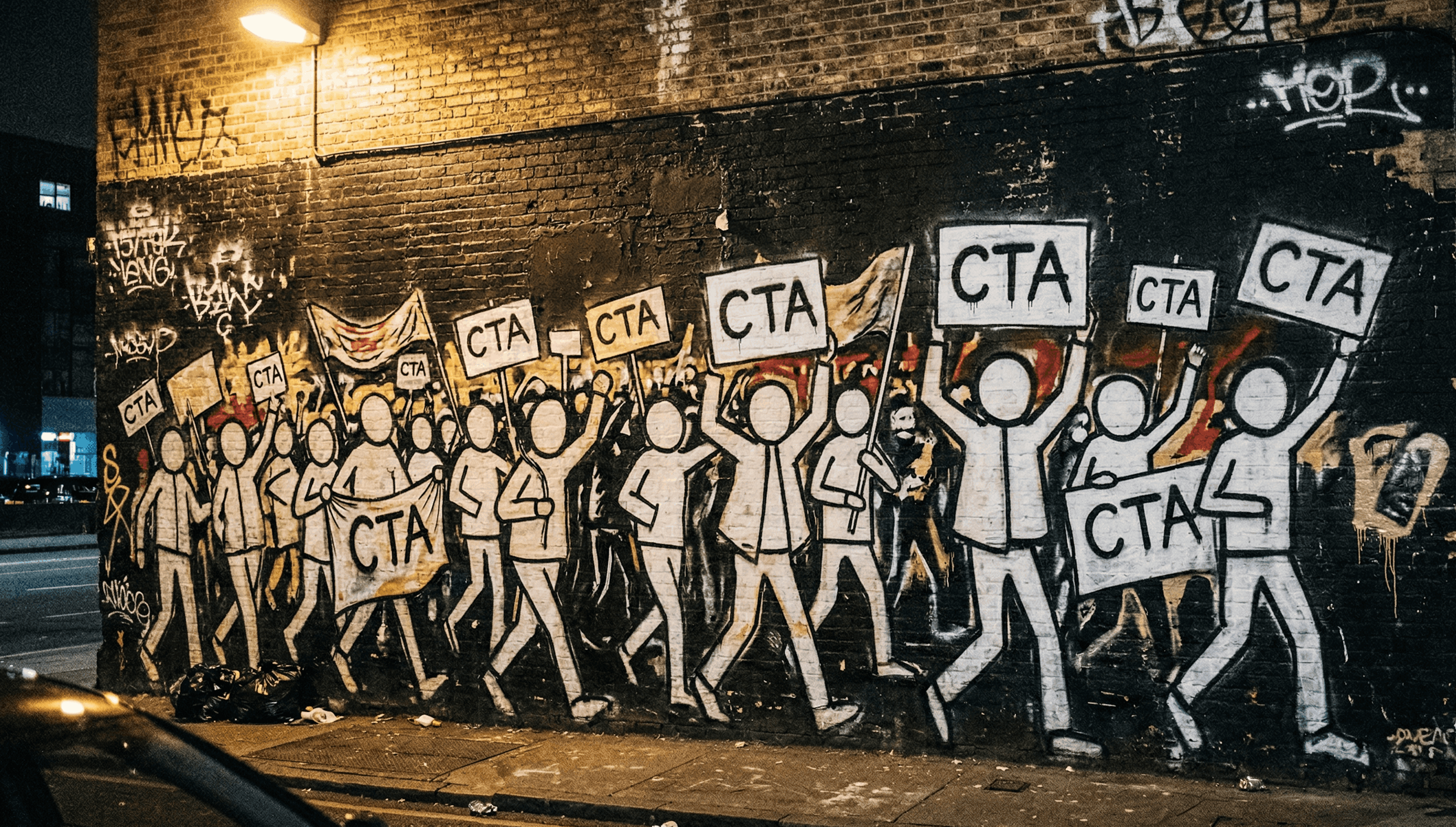
Call to action
For your three most important live deals, ask sales one simple question:
What is the one unspoken fear in the room?
Then audit your content, leadership visibility, and proof points and ask honestly what directly reduces that fear.
Map your buying groups.
Understand their personal and professional risks.
Decide what you want to be trusted for.
Ensure your story is consistent wherever they look.
If you want help turning your marketing into a system that builds confidence and consensus when you are not in the room, get in touch and we will introduce you to people who genuinely know what good looks like.