I have written, received, rewritten, and quietly apologised for more marketing briefs than I care to remember.
I have also been on the other side of the table, receiving briefs so unclear they made me wonder if the sender should issue a brief to help them write a brief.
And here is the pattern. When agency work fails, it is rarely because the agency is incompetent. Sometimes it is. But it is almost always because the brief was vague, political, or simply containing too much hope that everyone would be able to build the plane whilst flying it.
Agencies cannot fix confusion you have not fixed internally. If you cannot clearly explain the problem, nobody can solve it for you. A brief exists for one reason only and that’s to get everybody on the same page.
What a brief is actually for
A brief should not be seen as admin that can be done half assed whilst saving yourself for the face-to-face briefing where you incorrectly assume the agency are understanding every word of what you’re saying whilst furiously nodding their heads.
The brief is the moment you force yourself to decide what problem you are actually trying to solve, why now, what success looks like commercially, and what is fixed and what is flexible. Even if you know your role inside out, its not until you have to articulate it written down that you truly connect all those synapses and truly understand the big picture and how to communicate it.
B2B marketers have known this for years. Industry bodies like the ANA and 4A’s built entire agency briefing frameworks around exactly these principles. Every serious global brand uses some version of them.
Because without clarity, everything downstream becomes guesswork. Guesswork becomes rework. Rework becomes cost. Cost becomes frustration.
Why most briefs fail in B2B
Most bad briefs are not written by bad marketers. They are written by busy people trying to move quickly. But small gaps early snowball later.
Vague problems like “we need more awareness”. Undefined success like “best in class”. Hidden budgets. Political landmines discovered too late. Multiple stakeholders giving conflicting direction. Treating the brief like something to “talk through later”. From an agency point of view, this is chaos. And chaos produces safe, average work and the odd conversation around things not being in scope. And the output ultimately suffers.
Stop treating the brief like admin
If the brief is rushed, the thinking is rushed. If the thinking is rushed, the work is rushed.
The brief is the one truth everyone aligns around. It is not a placeholder for a future conversation. Writing it properly is some of the highest ROI time you will ever spend as a marketer.
Start with the business problem, not the deliverable
Too many briefs start like this. “We need a campaign.” “We need a website refresh.” “We need a brand video.” That is already the wrong starting point. Those are solutions.
A brief should start with the problem. For example, “Our win rate in enterprise RFPs has dropped from 22 percent to 14 percent. We think this is because prospects do not understand how we differ from competitors.” Now an agency can think. Not just execute. Specific beats abstract every time.
Use a structure that forces clarity
There are lots of formal templates out there. Most of them say the same thing in different language. Here is the simple structure I use and I feel it consistently works.
Context. Who you are. What is happening commercially. Why this matters now. This is my number one recommendation. Give agencies the honest truth in as much detail as possible. The brief isn’t a sterile marketing brochure. You do not need to sugar coat everything. You get the best out of your doctors by telling them absolutely everything and letting them decide how to proceed. Same principle applies here.
The real problem. What is actually broken or underperforming. With evidence.
Objectives. Business outcomes first. Then marketing outcomes. Be explicit about your KPIs and Objectives and Key Results (OKR). KPIs are operational signals like MQLs from target accounts, conversion rates, or pipeline created. OKRs are strategic outcomes like increasing enterprise pipeline or improving win rate. If you confuse the two, agencies optimise the wrong thing.
Audience. Not “decision makers”. Be precise. Titles, pressures, risks, and how they buy. If you have good personas, share them. If you don’t, it’s really worth putting the effort in before you brief an agency.
Insight. Why would anyone care. What tension or frustration are you solving.
Scope and deliverables. What you think you need the agency to deliver.
Constraints and non-negotiables. Budget ranges (please do this, it wastes time pretending it's a secret), timelines, legal rules, brand requirements, internal politics, technical limitations. Put reality on the table early. Constraints do not limit creativity. They focus it.
Success criteria. How you will judge the work. In plain English. If you cannot describe success clearly, you will never recognise it and it would be unfair to beat the agency with a stick later.
Decision rights and governance. Define who signs off strategy, who approves budgets, who can veto work, how feedback will be consolidated, and what gets escalated. If ten stakeholders can rewrite creative later, the agency needs to know now.
Cadence. Set check ins up front. Weekly, fortnightly, or milestone based. Aligned feedback loops massively reduce rework because assumptions are challenged early.
Separate leading and lagging expectations
Another common failure is expecting instant results, especially in B2B. Some results lead and some lag. Leading signals include engagement, meetings, and early pipeline. Lagging signals include revenue and closed deals. If you brief agencies only on lagging results, you could panic too early and kill good work before it compounds.
Define a single source of truth
One owner. One document. One version. Not email threads. Not conflicting decks. A brief should be the single source of truth everyone refers back to. If stakeholders contradict the brief mid project, you reset alignment. Otherwise, chaos creeps in.
What good versus bad looks like
“Enterprise win rate has fallen 14% in the last 6 months due to perceived weak differentiation in RFPs versus our top competitor.” Versus “Need more awareness.”
“We are only interested in influencing CIOs and procurement leads our Top 20 target Hedge Fund firms.” Versus “Decision makers in financial services.”
Success. “Increase win rate 20 percent in six months for our core service.” Versus “Be market leading.”
Constraints. “Budget is capped at $30,000 for this year and procurement benchmarking is required”. Versus not mentioned.
The difference, again, is clarity. You do not win by hiding anything.
Walk the agency through it live
Never just email the brief. Talk it through. Encourage questions. If an agency does not challenge parts of your brief, worry. The best ones always push back. The great ones walk away if they are not being heard.
Ship the brief early
Do not wait three weeks polishing language. Get a solid version out. Use it. Refine it. Real conversations improve briefs faster than internal wordsmithing ever will. Engage agencies before you have finished the brief, they will add value even if you end up not selecting them.
The simple rule to remember
A good brief makes it obvious what is being bought, why it exists, who it is for, what success looks like, and how decisions will be made. If any of those are fuzzy, the brief is not ready. The clearer you are upfront, the less you pay later in rework, delays, and disappointment.
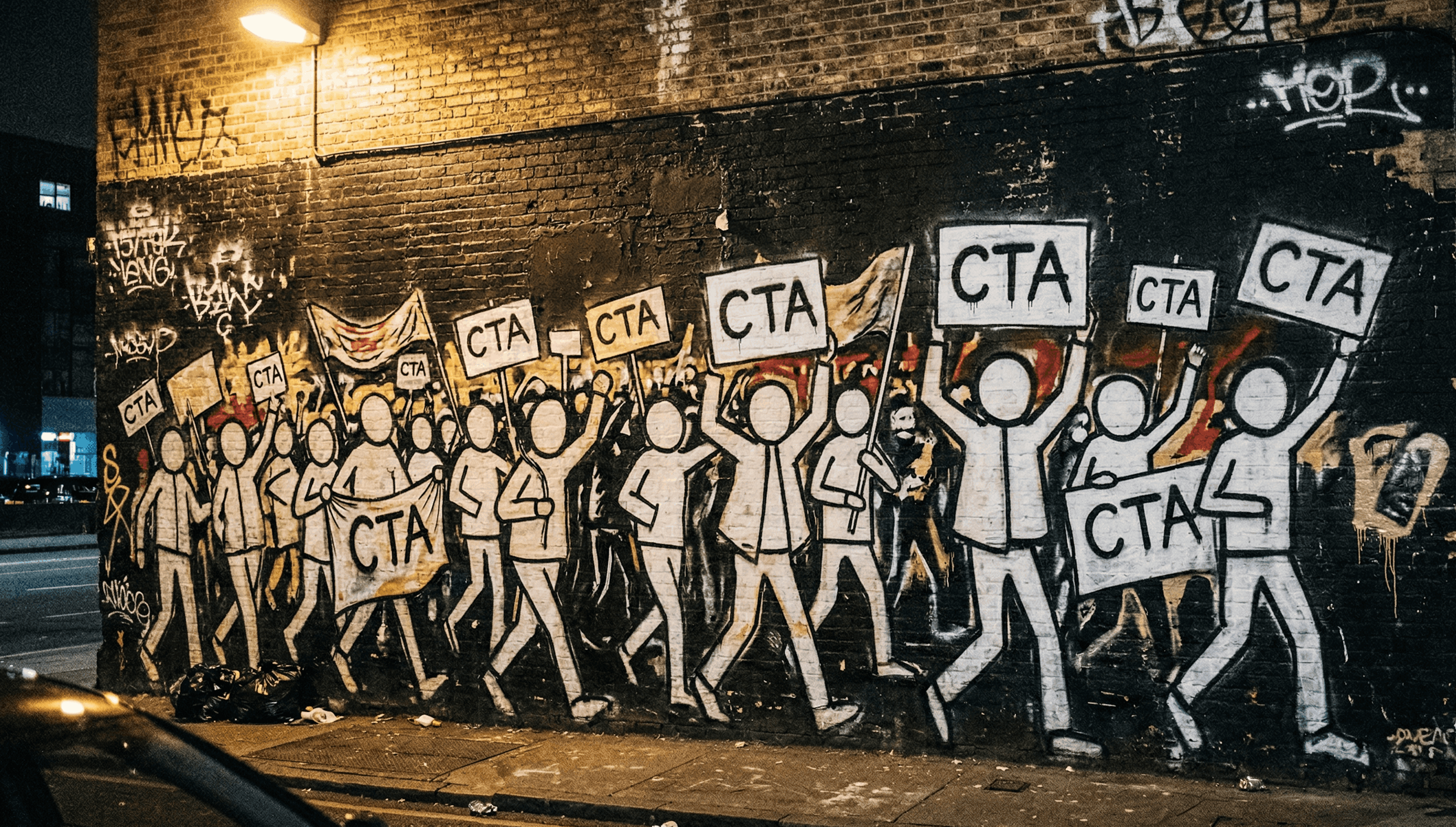
Call to action
Before your next agency project, stop and write the brief properly. Define the real problem. Be honest about constraints. Agree success criteria. Clarify who decides what. Then sit with sales and ask one question. If we nailed this, what would actually change commercially? Put that answer in the brief.
If you want help building briefs that agencies actually respect and that consistently produce better work, get in touch and we will introduce you to people who genuinely know what good looks like.