
Over the last twenty years, the number of business and marketing awards has exploded into its own little cottage industry. Publishers, agencies, consultancies, industry bodies and "communities" all run their own cash cows.
The number of categories multiply and get sillier every year. Entry fees rise. Sponsorship rate cards infiltrate your inbox. The shortlists get longer and the winners more plentiful, each of whom have conveniently bought a table for ten at £4k+ a pop.
And the running time of these events now seems close to breaching human rights.
B2B marketers see the game more than most.
In our profession, it often seems that every awards program a service line or country rep receives gets forwarded to marketing. "How fantastic, we have been shortlisted for this (self-proclaimed) prestigious award, let's enter!" Or "We have won this award for five years in a row, we must win again!" Or the even better "If we don't enter this award, the market may think we're not taking the service seriously."
It never ceases to amaze me how often the "Congratulations, you have been shortlisted…" emails get through, or forwarded, to marketing. We haven't submitted anything yet, not even paid the entry fee, but somehow, we have already been excellent according to people with absolutely zero practitioner experience. I have even worked for organisations that were shortlisted and 'won' awards for services we did not even provide.
Here’s a tip for you, ask IT to block the email domain.
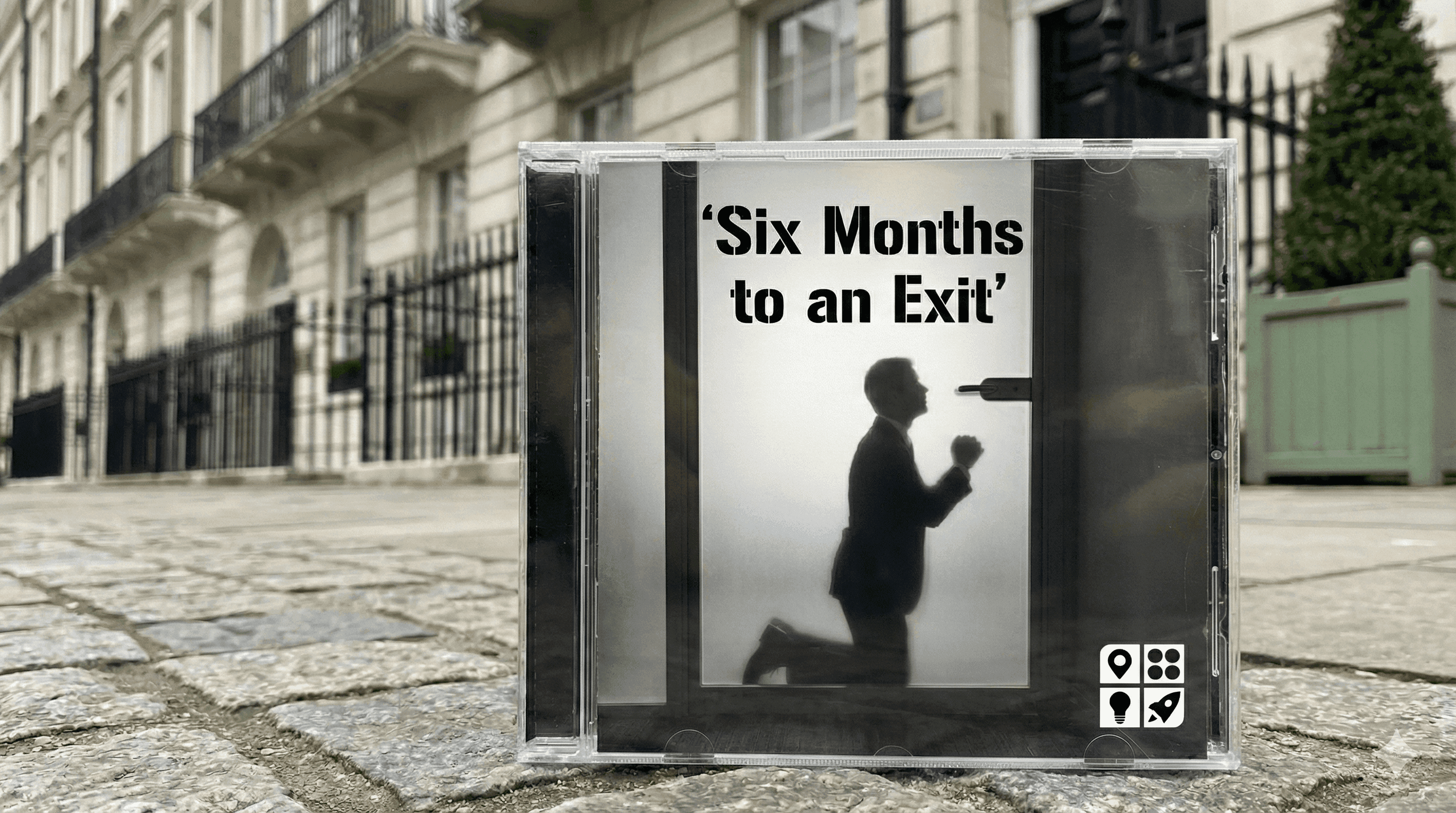
The song I wrote, Table for Ten, exaggerates it for effect, but the system it is mocking is very, very real.
Excellence, at scale
It has been a long time since awards were mainly about recognition. The vast majority are a revenue engine, designed around throughput. More categories mean more finalists. More finalists mean more tables. More tables mean more revenue. Excellence, it seems, is scalable.
The commercial model is not complicated. Charge for entries. Charge for category sponsorship. Don't pay judges (position it as an honour to be chosen). Sell tables. Publish a press release for every winner (sometimes for an additional fee). Upsell webinars or winner publications (“the agency should speak at our event for a fee”). Encourage social sharing. Offer early bird discounts for next year. Repeat annually.
The structural problems everyone ignores
None of this means every award is meaningless. There are still programmes with real judging rigour, respected panels, and genuine peer recognition. But the signal to noise ratio has completely collapsed and we all see it.
Research into award credibility across professional services shows the same structural weaknesses again and again.
Self-reported performance. Most entries are graphically designed narratives, not audits. Impact is described by the entrant and unverifiable. Entries can effectively write what they want. No questions asked.
Category inflation. As events grow, so do the labels. Not because the discipline has become that granular, but because more categories mean more revenue. "Best Use of X in Y for Z Segment in This Very Specific Geography" is not taxonomy. It's a very obvious way of creating new inventory.
Pay to play dynamics. Entry fees, sponsorship, and table purchases do not always explicitly buy trophies, but they do buy probability. Volume of entries, visibility on the night, and commercial proximity all increase the odds of walking away with something shiny.
Broken judging. Judges never have access to raw data and almost never have the time to challenge claims in depth. I agreed to judge one particular awards programme for B2B marketers and my conscience could only do so once. We were constantly rushed to decide (because they had expanded to far too many categories) without the time required to properly interrogate any of the claims or arrive at the most deserved winner.
I will never forget one email chain I was unfortunately CC'd on. It was an awards programme in the USA that was decided by, wait for it, a show of hands, claps, whoops and hollers in the room on the night. And this manager was emailing the whole C-suite to celebrate their 'win'.
The vast majority of panels are unpaid, time poor, and asked to assess a number of submissions in compressed windows. Even with the best intentions, scrutiny becomes surface level. It's somewhat crazy that people so readily agree to be judges and give up days of their time for free, when the organisers are raking in the money for the very same activity. That's not giving back to your profession. If anything, you are dumbing it down by playing into the charade and agreeing that you should do so for free, for 'exposure'.
The theatre of credibility
Then come the awards nights themselves. The black tie, drum rolls, comedian hosts (they are being paid BTW), the lighting, the band and the word 'prestigious' doing some major heavy lifting.
Awards borrow the visual grammar of credibility. But credibility does not come from staging. It comes from consequence.
Which leads to the question. Do customers care?
Every serious study of B2B buying behaviour says broadly the same thing. Buyers trust peers, proof, outcomes, and experience. Analyst validation and references matter. Case studies matter (especially via verbal referees). Demonstrable results matter.
Award logos barely register. Procurement might glance at them when shortlisting suppliers on large tenders to complement the providers already in mind, but experienced B2B buyers know the game.
Journalists know this too, which is why award press releases die as soon as the send button is pressed. They are not news. They are hollow advertisements, picked up only by automated newswires.
What awards are actually for
The value award programmes do add, however, is internal.
They validate effort and pad out a CV. They provide an excuse to get glammed up and have a night out (and are so much easier to sign off than a team building away day). They give managers some good news to share. They offer a morale moment in hard times.
They can also give younger team members something to celebrate which is always something I’d advocate for, especially relating to individual achievements. That moment in the spotlight can make the most talented of us work even harder and strive to hit even higher heights.
There is nothing wrong with recognition. My issue with them is when the symbol replaces the substance.
You see it in agency credentials that lead with trophies before outcomes, which is deeply off putting to competent CMOs. You see it in board slides where "industry recognition" fills space when pipeline is thin.
When applause becomes easier to earn than results, people start optimising for the applause.
In many award circuits, the fastest way to feel like a winner is not to build something genuinely brilliant. It is to pay for a beautifully written entry, buy a table, submit in multiple categories (sometimes over multiple years), and increase your statistical odds. If you also sponsor a category as well as enter? Well, guess what…
Rent or build
The perspex trophy is not the problem. The confusion of what it represents is.
Awards can be a byproduct of excellence, but they are a terrible substitute for it.
We should enjoy the night. Celebrate your team. Clap for the winners. Take the photo. But be honest.
If our proudest slide is the awards slide, we should be worried.
The market does not care how many times we have been shortlisted. It only cares whether what you do actually works.
If our marketing success depends on trophies, we are not building a brand. We are renting applause.
How can we fix it? If we can bang our collective heads together, B2B Marketing United will make it happen.
Or is it all ok as-is? A fun night out being reason enough to just ignore its flaws?
—
Listen to Table for Ten on Marketing Mixtape